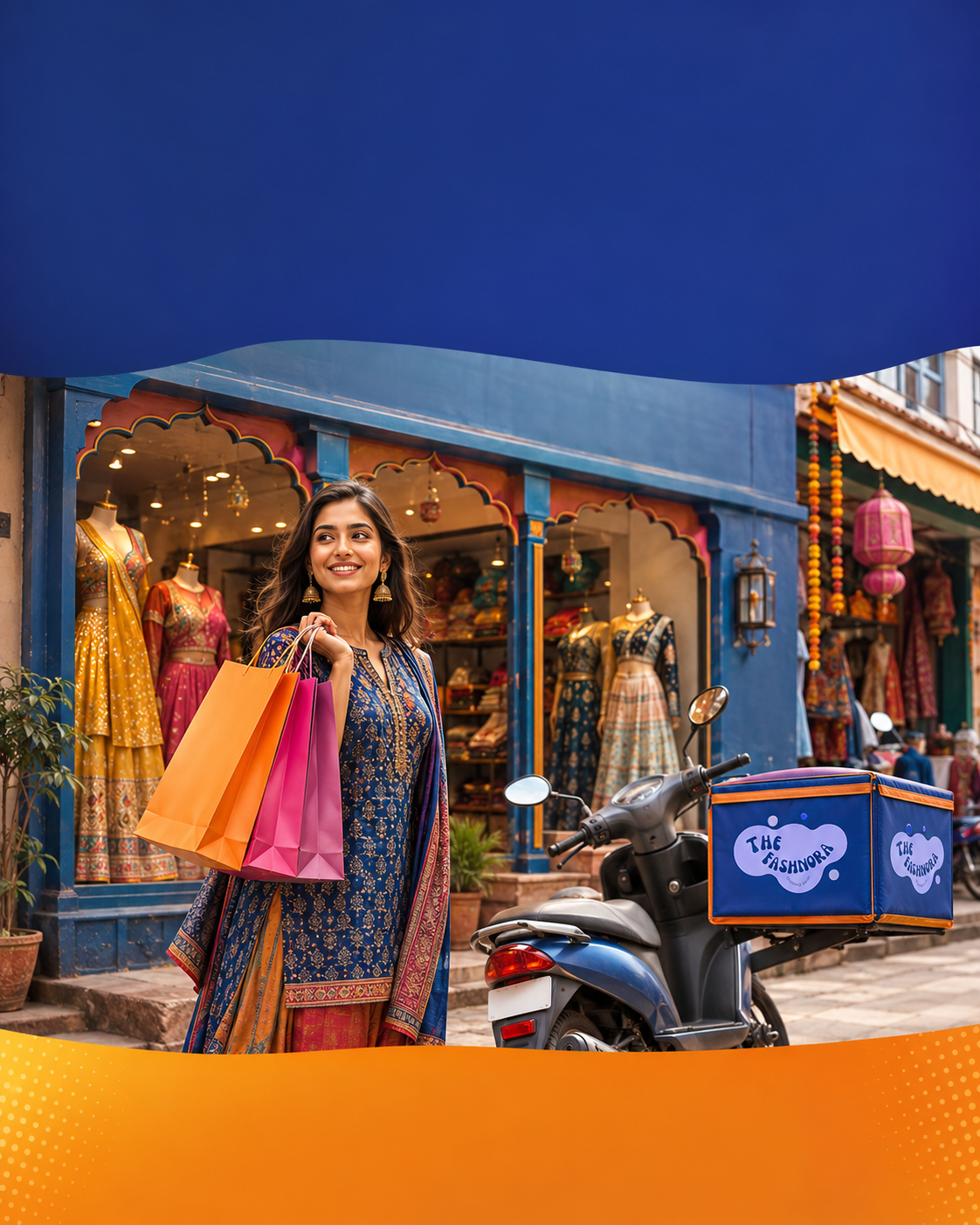
How Indore's independent clothing shops are winning back customers — one same-day delivery at a time
For the last decade, the story of Indian retail has followed a predictable script: big e-commerce platforms move in, local shops lose foot traffic, and small business owners are left choosing between joining a marketplace that takes 30-50% commission or watching their revenue shrink year after year.
In Indore, that script is being rewritten.
The Problem With "Big Marketplace" Fashion
Amazon and Flipkart built their dominance on convenience — fast delivery, easy returns, one app for everything. But that convenience came at a cost that most shoppers never see directly.
A local vendor selling a ₹2,000 saree on Amazon typically loses 30-50% of that sale to commission and fees. That's ₹600-1,000 gone before the vendor even covers their own costs. The result? Prices go up for shoppers, margins shrink for shop owners, and the money that used to circulate within the local economy flows out to a platform headquartered somewhere else entirely.
Meanwhile, shoppers lose something too: the ability to buy from a real person who has run a saree shop in Palasia for twenty years, who knows the difference between authentic Bandhani work and a factory print, and who will remember your preferences the next time you walk in.
What Local-First Delivery Looks Like
TheFashnora was built on a simple bet: what if same-day delivery didn't require cutting out the local shop owner?
Here's how it works in Indore today:
- 200+ verified local vendors across zones like Vijay Nagar, Palasia, MR10, and Khajrana
- Order by 2 PM, delivered by evening — often within 2-3 hours depending on your zone
- 8-12% commission, compared to the 30-50% charged by large marketplaces
- 20-30% lower prices for shoppers, because vendors aren't absorbing massive platform fees
- 95% of profit stays with the vendor — and by extension, stays in the local economy
The math is straightforward. When a platform takes a smaller cut, vendors can price more competitively while still earning more per sale. Shoppers get a better price and faster delivery than they'd get waiting a day or two for a warehouse-shipped order from outside the city.
Real Impact, Real Vendors
The numbers tell part of the story, but the vendor experience tells the rest. Shop owners who had resigned themselves to declining foot traffic — some even considering closing their doors — are now seeing online orders become a meaningful part of their business, in some cases growing fast enough to justify hiring additional staff just to keep up with order volume.
For customers, the shift is just as noticeable. Ordering in the early afternoon and having a saree delivered by evening, in the same condition it would be if you'd walked into the shop yourself, is the kind of experience that used to be exclusive to big-budget quick-commerce apps — not something available from a neighborhood boutique.
Why This Model Works Better for Tier-2 Cities
National marketplaces optimize for scale, which means their logistics networks are built around large fulfillment centers, often located outside the city entirely. That's efficient for shipping nationally, but it's slow for shoppers who just want something from three streets away — and it does nothing for the local shop that gets bypassed in the process.
A city like Indore has 500+ independent clothing shops, many with decades of trust built into their name. A local-first model doesn't have to build a new supply chain from scratch or convince customers to trust an unfamiliar brand — the trust already exists at the shop level. All the platform has to do is make that same trusted shop reachable in two hours instead of two days.
That's a fundamentally easier problem to solve than competing with Amazon's warehouses — and it's why this model scales city by city rather than trying to boil the ocean on day one.
What's Next
Indore is the starting point, not the destination. As more zones come online across the city and the vendor network grows, the same model — verified local shops, fair commission, same-day delivery — is designed to expand to other cities where independent fashion retailers are facing the same pressure from national platforms.
The bigger idea is simple: local businesses don't need to disappear to compete with e-commerce. They need a faster, fairer way to reach the customers who already want to buy from them.
Want same-day fashion delivery from Indore's verified local shops? Join the waitlist or browse local vendors.
Independent local hubs like Vijay Nagar boutique hubs and Robot Square fashion stores allow shoppers to buy directly from neighborhood vendors online.
